







Machine Learning Training helps learners build expertise in AI, data analysis, and predictive modeling to solve real-world problems. Covering Python, R, statistics, supervised and unsupervised learning, neural networks, and deep learning, this training provides hands-on experience with real datasets and projects. Designed for freshers, IT professionals, and data enthusiasts, it equips you with the skills to design intelligent systems, secure global certifications, and advance into roles like ML Engineer, Data Scientist, or AI Specialist. With flexible online and classroom options, Machine Learning Training ensures a future-ready career in the world of artificial intelligence.
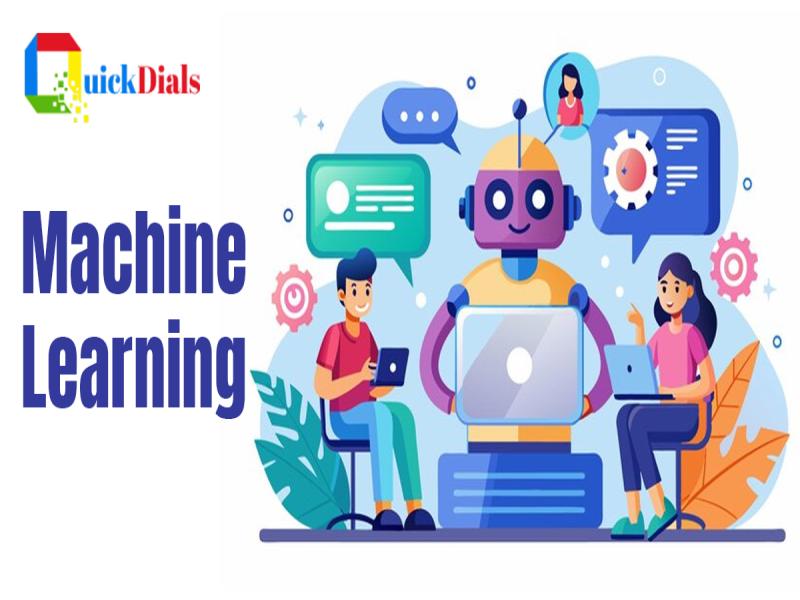
Machine Learning Training
Machine Learning Training – Master AI & ML for a Future-Ready Career
Introduction
In the era of artificial intelligence, Machine Learning (ML) has become the driving force behind innovations like recommendation engines, chatbots, fraud detection systems, self-driving cars, and smart assistants. Businesses across industries are adopting ML to make intelligent decisions and automate processes.
As demand for ML-powered solutions grows, so does the need for skilled professionals. That’s where Machine Learning Training plays a vital role. Whether you’re a fresher entering the IT world or a professional looking to upskill, Machine Learning Training helps you master the concepts, tools, and techniques needed to build smart applications and accelerate your career.
What is Machine Learning Training?
Machine Learning Training is a structured program that teaches you how to design algorithms and models that enable computers to learn from data without being explicitly programmed.
The training typically covers:
- Programming languages – Python, R, and SQL
- Mathematics and statistics – probability, linear algebra, and regression
- Supervised Learning – classification and regression models
- Unsupervised Learning – clustering and dimensionality reduction
- Deep Learning – neural networks, CNNs, RNNs, and NLP
- Model evaluation – accuracy, precision, recall, and F1-score
- Real-world projects – working with datasets from finance, healthcare, retail, and more
By the end of the program, learners can design ML models, analyze data, and apply AI techniques to solve complex problems.
Why is Machine Learning Training Important?
Machine Learning is shaping the future of every industry. Organizations need ML experts to build predictive models, automate processes, and create intelligent systems.
Here’s why Machine Learning Training is important:
- High demand in the job market – ML is among the most in-demand skills worldwide.
- Attractive salaries – ML Engineers and Data Scientists earn premium salaries.
- Industry relevance – From IT and banking to healthcare and retail, ML is everywhere.
- Hands-on learning – Training focuses on real-world projects and practical skills.
- Future-proof career – ML expertise ensures you stay competitive in AI-driven industries.
Key Modules in Machine Learning Training
- 1. Introduction to Machine Learning: Covers the basics of ML, including its applications, workflow, and real-world use cases.
- 2. Python & R for ML: Learn programming essentials, data structures, libraries like NumPy, Pandas, Matplotlib, and Scikit-learn.
- 3. Statistics & Probability: Understand mathematical foundations like linear regression, hypothesis testing, and probability distributions.
- 4. Supervised Learning: Covers regression models, decision trees, support vector machines, and ensemble methods like Random Forests.
- 5. Unsupervised Learning: Focuses on clustering techniques (K-means, hierarchical clustering) and dimensionality reduction (PCA).
- 6. Deep Learning: Explores artificial neural networks, convolutional neural networks (CNNs), recurrent neural networks (RNNs), and natural language processing (NLP).
- 7. Model Deployment: Learn how to deploy ML models into real-time applications using cloud platforms like AWS, Azure, and Google Cloud.
- 8. Capstone Projects: Hands-on experience with real datasets across industries like e-commerce, finance, and healthcare.
Career Opportunities After Machine Learning Training
Completing Machine Learning Training opens doors to multiple high-demand job roles:
- Machine Learning Engineer: Design and implement ML models.
- Data Scientist: Analyze data, build predictive models, and extract insights.
- AI Engineer: Work on advanced AI applications like NLP and computer vision.
- Business Intelligence Analyst: Use ML to generate actionable business insights.
- Research Scientist: Explore and innovate in the field of AI/ML.
These roles are available globally, making ML Training a valuable investment for a long-term career.
Who Should Enroll in Machine Learning Training?
- Freshers who want to start a career in AI/ML.
- IT professionals aiming to upskill.
- Data analysts transitioning to advanced analytics.
- Engineers, statisticians, or mathematicians interested in applied machine learning.
- Business professionals who want to integrate AI-driven strategies into their work.
Online vs. Classroom Machine Learning Training
- Online Training: Flexible, cost-effective, and suitable for working professionals. Self-paced or live instructor-led formats available.
- Classroom Training: Ideal for learners who prefer structured, face-to-face interaction.
- Hybrid Training: Combines online flexibility with classroom guidance.
Benefits of Machine Learning Training
- Hands-on Skills – Learn by solving real business problems.
- Certification – Earn globally recognized certifications.
- Placement Assistance – Many institutes provide career guidance and interview preparation.
- Industry Projects – Build a strong portfolio with real datasets.
- Global Demand – ML professionals are needed across industries.
The Future of Machine Learning
The future of Machine Learning is bright, with applications in autonomous vehicles, healthcare diagnostics, fraud detection, financial forecasting, smart cities, and robotics. As AI adoption accelerates, the demand for ML experts will continue to grow.
Emerging areas like Generative AI, reinforcement learning, and quantum machine learning will further expand the career scope for professionals.
Conclusion
Machine Learning Training is not just about learning algorithms—it’s about gaining the skills to shape the future. With hands-on training, certification support, and exposure to real-world projects, you can become an industry-ready ML professional.
Whether you are a beginner or a working professional, now is the perfect time to invest in Machine Learning Training and build a career in one of the most exciting and rewarding domains in technology.