





_1769069075.webp "SAP FICO")












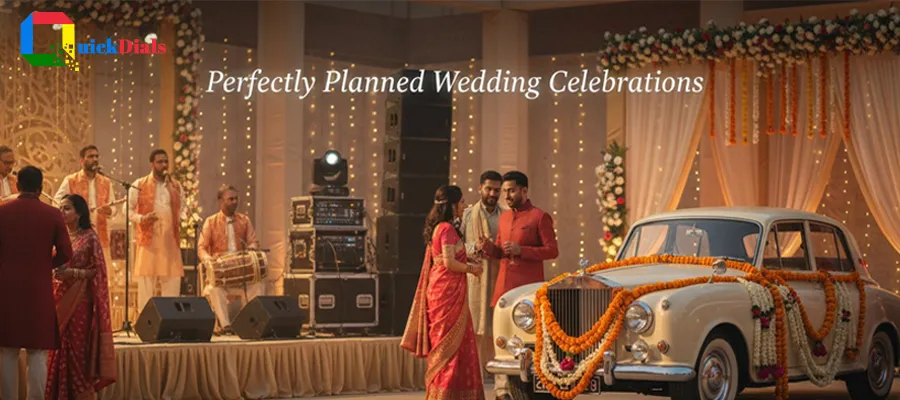
Wedding Planning Services focuses on creating well-balanced and smoothly managed wedding celebrations. A modern wedding is not just about decoration or music; it works like a live setup where sound, movement, lighting, styling, and timing must function together. We help plan weddings with a clear technical approach, ensuring clean music output, controlled sound levels, smooth entries, and practical styling that does not block space or movement. From marriage wedding car decoration with flowers to live music like dhol shehnai and a reliable DJ sound system for rent, every element is planned to support the overall flow of the event. Our planning ensures that sound remains comfortable for guests, visuals look natural in photos and videos, and transitions happen on time without confusion. We also consider venue size, power planning, crowd movement, and equipment reliability to avoid last-minute issues. By focusing on coordination rather than complexity, Wedding Planning Services helps create celebrations that feel effortless, organized, and enjoyable for everyone—from the first entry to the final song.
How to Add Music, Style & Celebration to Your Wedding Day
 5.0
out of
based on 567 ratings
5.0
out of
based on 567 ratings
How Music, Movement, and Styling Work Together in a Wedding Setup
A wedding works like a live setup where many elements run together at the same time. Music, entry movement, sound control, lighting, and styling must stay in balance. If one element fails, the overall flow breaks.
Even marriage wedding car decoration with flowers is not only about appearance. It affects how the car moves, how long the entry takes, how photographs turn out, and how heat impacts the flowers during the event.
Modern weddings require planning at a technical level. This does not mean using complex tools. It means applying clear thinking. Music should sound clean, movement should feel smooth, and styling should never block space or sound. When all parts work together, the celebration feels natural.
Music Setup and Sound Control
Music is the main driver of energy at a wedding. However, music without control turns into noise. Sound planning must be completed before the event begins.
Types of Wedding Music
- Live music
- Recorded music
Live music delivers raw sound, while recorded music offers stability. Both types must be balanced carefully.
Traditional instruments such as dhol shehnai produce sharp sound waves that travel far and reflect from walls. Incorrect speaker placement can make sound feel too loud or unclear. Speaker direction matters more than volume.
Key Sound Control Factors
- Distance between speakers and performers
- Microphone quality
- Echo and feedback control
- Sound balance for open and closed venues
Music timing is equally important. Live music should start and stop at fixed moments. Random starts create confusion, while controlled timing keeps the energy steady.
Sound Equipment and Power Planning
Many events fail due to weak or mismatched equipment. A DJ sound system for rent works effectively only when the system matches the venue size.
Sound systems have defined limits. When pushed beyond their capacity, sound quality breaks, leading to distortion and discomfort for guests.
Essential Sound Equipment Components
- Speakers with wide sound coverage
- Mixer to control sound inputs
- Amplifier to manage power output
- Backup cables and microphones
Power planning is critical. Sound systems require stable electricity. Power drops can cause noise, interruptions, or complete shutdowns.
In cities such as Delhi, sound systems are becoming increasingly digital. Many venues now use sound limit devices that automatically reduce volume when permitted levels are crossed.
Visual Style with Technical Balance
Styling should never block movement or sound. Heavy décor may look attractive, but it creates problems if not planned carefully. Flowers, fabric, and frames all add weight and react to heat and wind.
Technical Styling Considerations
- Flowers lose water quickly in high temperatures
- Fabric can block airflow and sound
- Metal frames reflect sound and light
Proper floral fixing keeps arrangements stable. Lightweight materials reduce pressure on frames, while well-planned lighting maintains natural colors.
Vehicle styling also requires careful planning. Excess decoration affects speed and safety. Loose items shake during movement, while secure fixing prevents damage and delays.
Lighting angles play an important role. Strong front lighting can wash out details, while soft side lighting maintains depth in photographs and videos.
Movement, Timing, and Crowd Flow
A wedding crowd moves based on sound and available space. When music plays, people move. When music stops, attention shifts naturally.
Key Movement Planning Areas
- Entry routes
- Exit paths
- Performer space
- Guest standing areas
Clear routes help prevent delays. Music cues guide movement, while lighting changes signal transitions between moments.
Crowd size directly affects sound. As more guests arrive, sound gets absorbed, making music feel softer. Sound systems must be adjusted with full crowd presence in mind.
Heat also influences movement. Proper shade and airflow keep guests comfortable, and comfortable guests enjoy music and activities better.
Many planners now rely on digital schedules that show exact timings for each part of the event. When everyone follows the same plan, confusion is reduced significantly.
Core Technical Elements and Their Purpose
| Element | Why It Is Needed | What Happens If Ignored |
|---|---|---|
| Live Music | Adds energy and tradition | Sound overlap |
| Sound System | Controls volume and clarity | Noise and feedback |
| Lighting | Improves visibility | Poor photos |
| Floral Setup | Frames the space | Blocked movement |
| Power Backup | Keeps systems running | Event stops |
This highlights that every element serves a specific purpose. Nothing in a wedding setup is purely decorative.
Risk Control and Backup Planning
Live events require backup planning. Equipment can fail, and weather conditions can change unexpectedly.
Basic Backup Essentials
- Extra microphones
- Spare sound cables
- Backup music device
- Power generator or inverter
Communication is equally important. Teams must stay connected so issues can be resolved quickly. Sound checks before the event help identify problems early, and even a short test significantly improves performance.
Wedding Entry and Car Movement Planning
A wedding entry is not only about arrival; it is about timing and coordinated movement. The car, music, and crowd must move together.
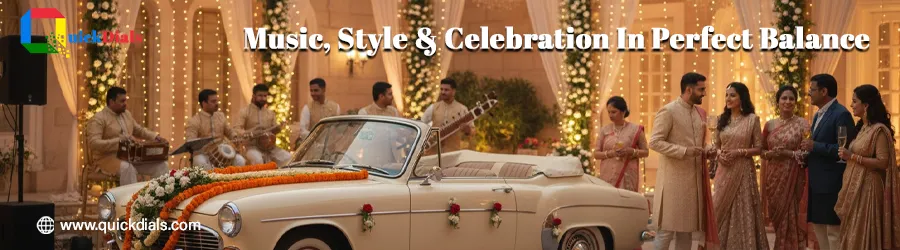
When marriage wedding car decoration with flowers is planned, the weight and size of the decoration matter. Heavy flowers slow down the vehicle, while loose decorations shake during movement. This affects how long the entry takes.
Music must align with this timing. If the car moves slowly, music should play longer. If the car moves faster, music should end on time. Simple hand signals and fixed timing help ensure a smooth and controlled entry.
Sound Balance and Guest Comfort
Live music should not be played too close to guests. When sound sources are placed directly next to people, it causes discomfort and ear strain.
Maintaining distance helps spread sound evenly. Many weddings now use louder sound near entry areas and softer sound near seating sections. This balance keeps energy high while ensuring guest comfort throughout the celebration.
Summary
A wedding celebration works best when music, styling, and movement function as one coordinated system. Sound must remain clear and controlled. Styling should support space and flow, and timing should guide people naturally.
Technical planning does not remove emotion—it protects it. When systems run smoothly, guests feel relaxed and involved, problems remain unnoticed, and the celebration feels effortless. Understanding technical details helps avoid mistakes, reduce stress, and create a smooth experience from the first entry to the final song.